
·5 min read
9 Simple Daily Habits for a Healthier Life
Small, realistic habits that can help you care for your body and mind, one day at a time.
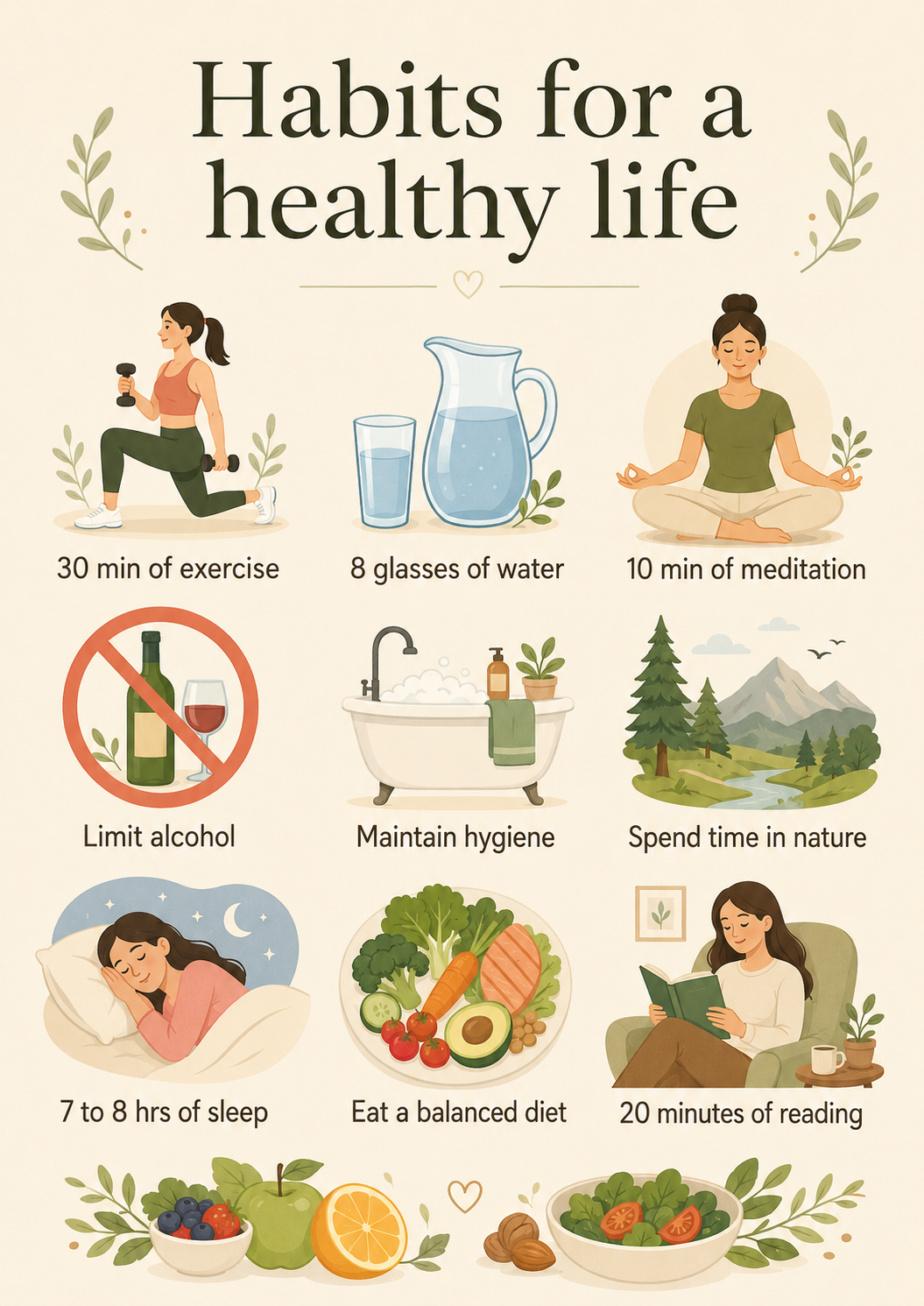
Quick Answer
Small, realistic habits that can help you care for your body and mind, one day at a time. Living a healthier life does not have to begin with a strict plan or a complete change to your routine. It often begins with one small choice that you can repeat tomorrow. You might drink a glass of water with.
Updated April 16, 2026 · 5 min read read
Living a healthier life does not have to begin with a strict plan or a complete change to your routine. It often begins with one small choice that you can repeat tomorrow.
You might drink a glass of water with breakfast, take a short walk, cook a simple meal, or go to bed at a regular time. These choices may seem ordinary, but they can make your days feel more steady and cared for.
Your health needs are personal. If you have a health condition, pain, balance concerns, or a new symptom, ask your doctor or another qualified health professional for advice that suits you.
1. Keep Water Within Easy Reach
Place a glass or bottle of water where you spend time. Keep one by your chair, desk, or kitchen table. Taking a few sips through the day is often easier than trying to remember a large amount all at once.
Water needs are different for each person. If your doctor has asked you to limit fluids, follow that advice. Otherwise, make drinking water a calm part of meals and daily breaks.
2. Move a Little Every Day
You do not need a hard workout to begin moving more. A short walk, gentle stretching, light gardening, or walking around your home can all count.
Choose something that feels safe and pleasant. You could start with five or ten minutes after breakfast or lunch. The National Institute on Aging advises older adults to build activity gradually and choose activities that suit their abilities.
If you feel unsteady, have pain that does not go away, or are returning to activity after an illness, ask a health professional what is right for you.
3. Build Simple, Balanced Meals
Healthy meals do not need to be expensive or complicated. Aim to include a mix of foods you enjoy, such as vegetables or fruit, a protein food, and a filling food like rice, potatoes, oats, or whole grain bread.
Fresh, frozen, and tinned foods can all be useful. Keep a few easy choices at home for busy days, such as eggs, beans, soup, yoghurt, frozen vegetables, or fruit.
The goal is not a perfect plate at every meal. It is to make nourishing food easier to choose most of the time.
4. Give Sleep a Regular Place in Your Day
Sleep is easier to protect when it has a routine. Try to go to bed and wake up at similar times most days. Make the hour before bed quieter by dimming lights, putting away screens, or reading something gentle.
Most older adults need about seven to nine hours of sleep each night. If you often struggle to sleep, wake up feeling exhausted, or feel sleepy during the day, speak with a doctor.
5. Make Time for a Quiet Pause
Your mind also needs a break. Give yourself a few quiet minutes each day to sit, pray, breathe slowly, listen to calm music, or simply look out of the window.
There is no need to do this perfectly. A quiet pause can be as simple as taking five slow breaths before you begin the next task.
6. Spend Some Time Outdoors
Fresh air and a change of view can lift the shape of a day. Sit near an open window, water a plant, walk to the gate, or spend a few minutes in a garden or nearby park.
Choose a time of day that feels comfortable. Wear steady shoes if you are walking outdoors, and take care in very hot, cold, or wet weather.
7. Keep Personal Care Easy and Regular
Small care routines can help you feel ready for the day. A shower or wash, clean clothes, brushing your teeth, and taking time with your appearance can be simple signals that you are looking after yourself.
Make these routines easy to do. Keep the items you use often within reach and use a sturdy chair if standing for a long time is tiring.
8. Notice How Alcohol Fits Into Your Life
If you drink alcohol, notice how it affects your sleep, mood, balance, and daily routine. It can also interact with some medicines.
If you are unsure about what is suitable for you, especially if you take regular medication or have a health concern, ask your doctor or pharmacist. Choosing an alcohol free drink on some occasions can be a simple way to check how you feel.
9. Give Your Mind Something Enjoyable to Do
Reading, puzzles, music, crafts, learning a new skill, or talking with a friend can add enjoyment to your day. Choose an activity that feels interesting, not like a task you must finish.
Even twenty quiet minutes with a book, magazine, or audiobook can create a welcome pause. Keep it simple by leaving the book or device where you will see it.
Start With One Habit This Week
You do not need to begin all nine habits at once. Pick one that feels easy and decide when you will do it. For example, take a short walk after lunch or place a glass of water beside your breakfast plate.
After a week, notice what felt good and what was difficult. Keep the habit that fits your life. Then add another when you feel ready. A healthier life is built through steady care, not pressure.
Sources and further reading
- Tips for Getting and Staying Active as You Age, National Institute on Aging
- Sleep and Older Adults, National Institute on Aging
- Healthy Meal Planning: Tips for Older Adults, National Institute on Aging

